Miro plan & tier upgrades · 2026
How Miro could move customers to a new plan and keep their trust
A plan change usually arrives as a bigger bill. This redesign turns it into a choice: an in-product heads-up, a plan lock, and three honest paths, built to be tested against what customers see today.
01 The problem I saw
I use Miro. I signed up for a plan because of what it offered. Then the pricing changed, and nobody told me. No update, no explanation, just a bigger bill.
Miro had added something new, and now I was being asked to upgrade and pay more for an offering that wasn’t part of the plan when I signed up. I didn’t ask for it, and nobody asked me.
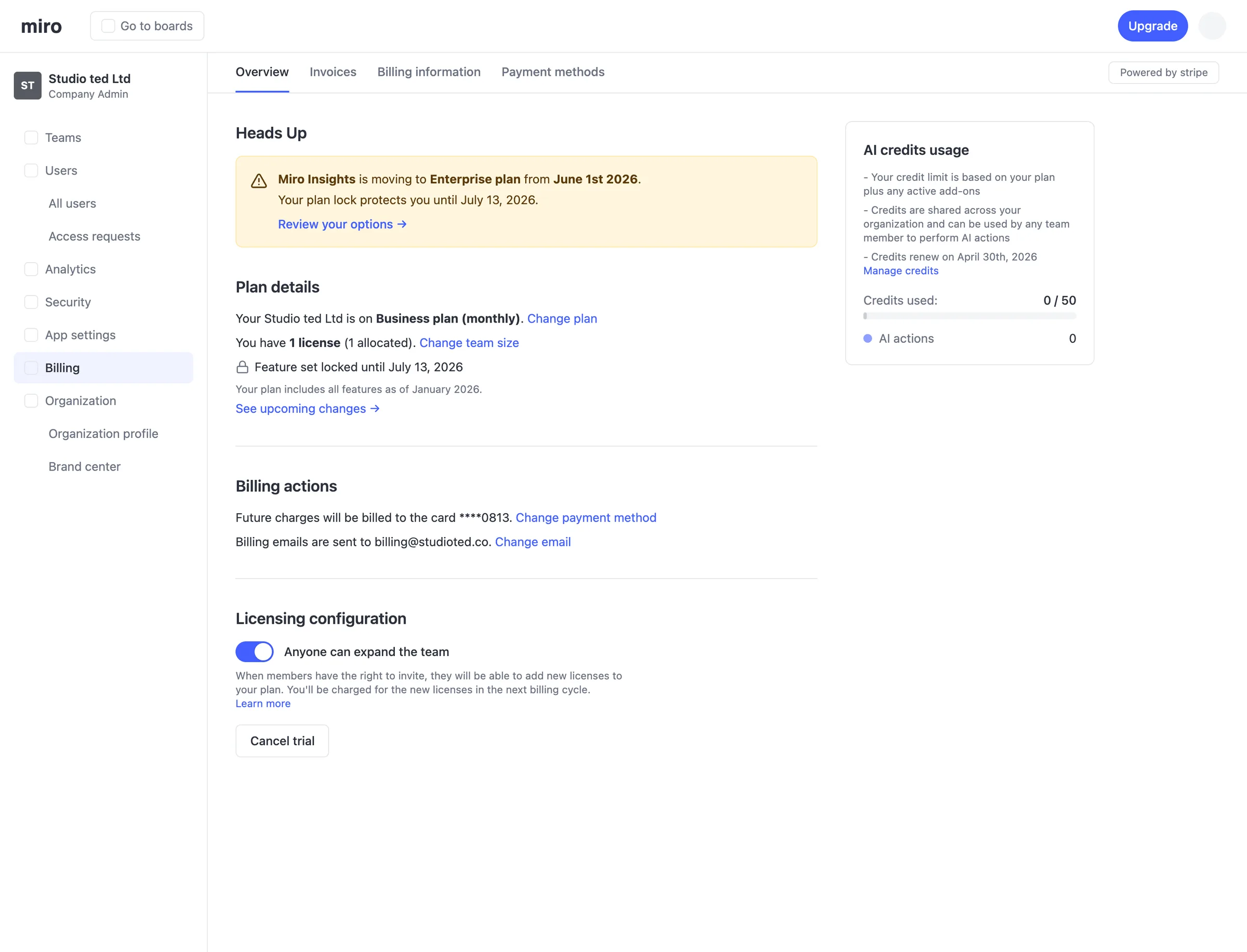
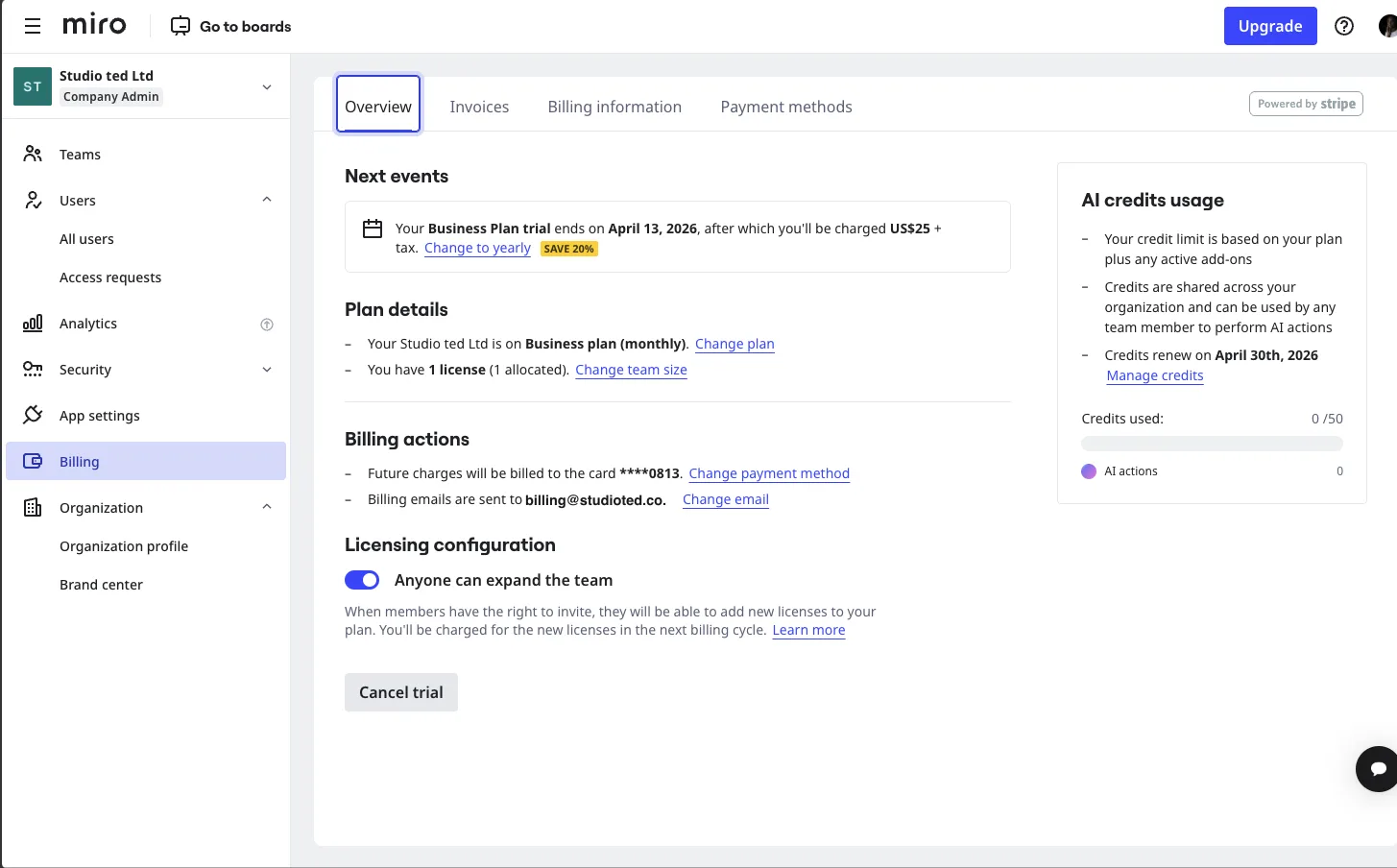
Even the billing page tells me when my trial ends, but says nothing about what’s changing in my plan. I found out through the price. The change arrived as news, not as a choice.
So I went to voice it, and found I wasn’t alone. Other customers had shared the same experience publicly. That turned my frustration into a design question: how could Miro have handled this change without breaking our trust in the product and its pricing?
02 The solutions I propose
Tell them in the product, before it happens. A Heads Up banner on the billing page names what’s moving (Miro Insights, to Enterprise), when (June 1, 2026), and what protects them meanwhile: a plan lock until July 13, 2026.
 Psychological reactanceChange that lands unannounced makes people push back to regain control. Saying it first, in the product, swaps a surprise for time.Hick’s lawOne action at the moment of bad news, not a menu. Fewer choices up front, so people act instead of stalling or leaving.Endowment effectPeople value what they already have more than what they could gain. Showing the lock where the plan lives protects that sense of ownership.
- Psychological reactanceChange that lands unannounced makes people push back to regain control. Saying it first, in the product, swaps a surprise for time.
- Hick’s lawOne action at the moment of bad news, not a menu. Fewer choices up front, so people act instead of stalling or leaving.
- Endowment effectPeople value what they already have more than what they could gain. Showing the lock where the plan lives protects that sense of ownership.
Give them real paths, not one. Stay on Business with the January 2026 version. Upgrade to Enterprise at 20% off for the first year. Or downgrade to Team and save £6 a seat each month. Each path states its cost plainly, including what you lose.
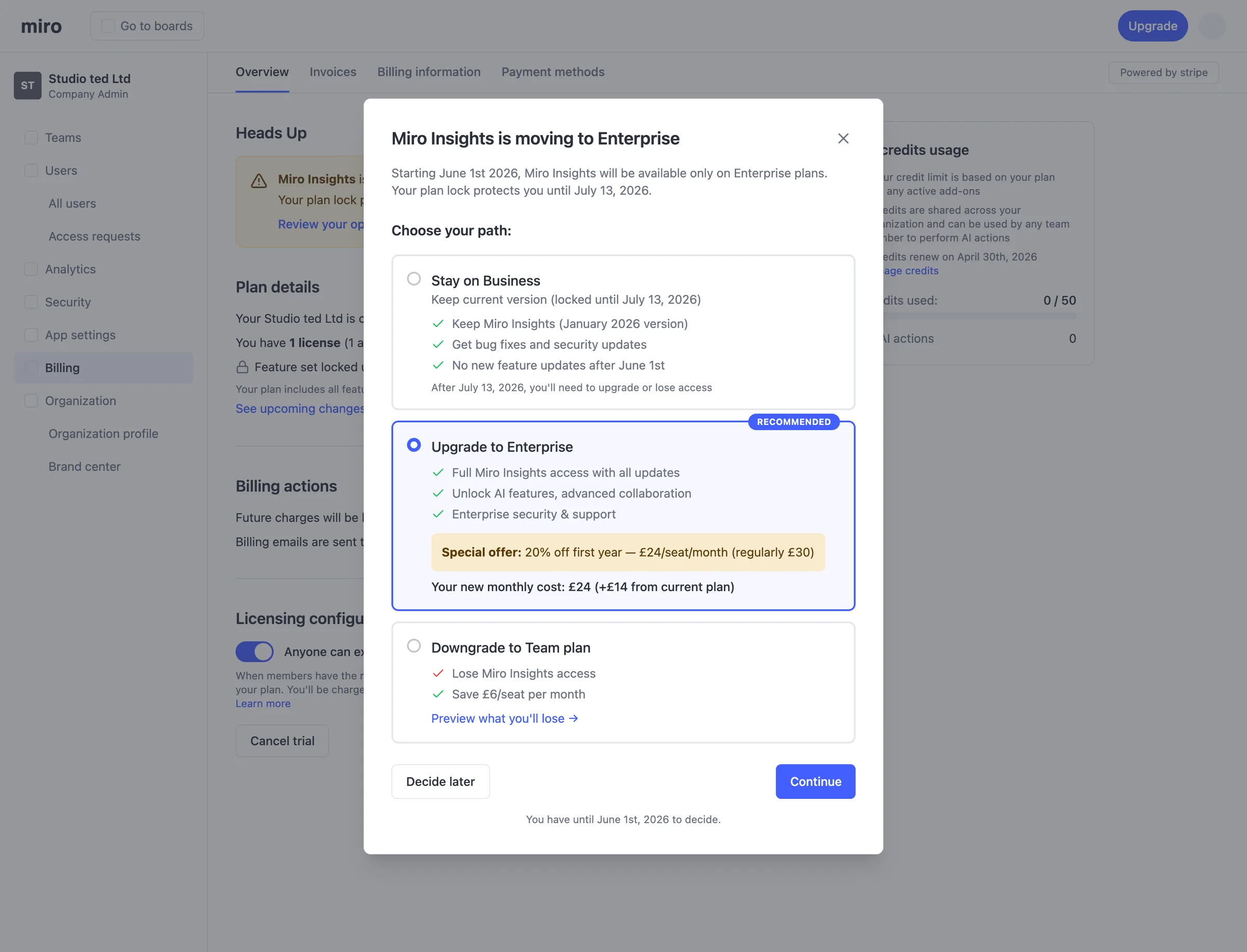 AutonomyStaying is a real, named option. Feeling free to stay is what makes it safe to consider moving.Anchoring£24 sits next to “regularly £30”, so the offer is judged against the full price, not against today’s bill. The +£14 is still stated, so the anchor never hides the cost.Loss aversion, used honestlyLosses weigh more than equal gains. Naming the loss before the saving prevents a downgrade people regret a week later.
- AutonomyStaying is a real, named option. Feeling free to stay is what makes it safe to consider moving.
- Anchoring£24 sits next to “regularly £30”, so the offer is judged against the full price, not against today’s bill. The +£14 is still stated, so the anchor never hides the cost.
- Loss aversion, used honestlyLosses weigh more than equal gains. Naming the loss before the saving prevents a downgrade people regret a week later.
Recommend openly, never push. The upgrade carries a Recommended badge because it’s the best path for most teams using Insights, and the design says so. “Decide later” is always there. No countdown, just a date, and a confirmation that the choice can change any time before June 1.
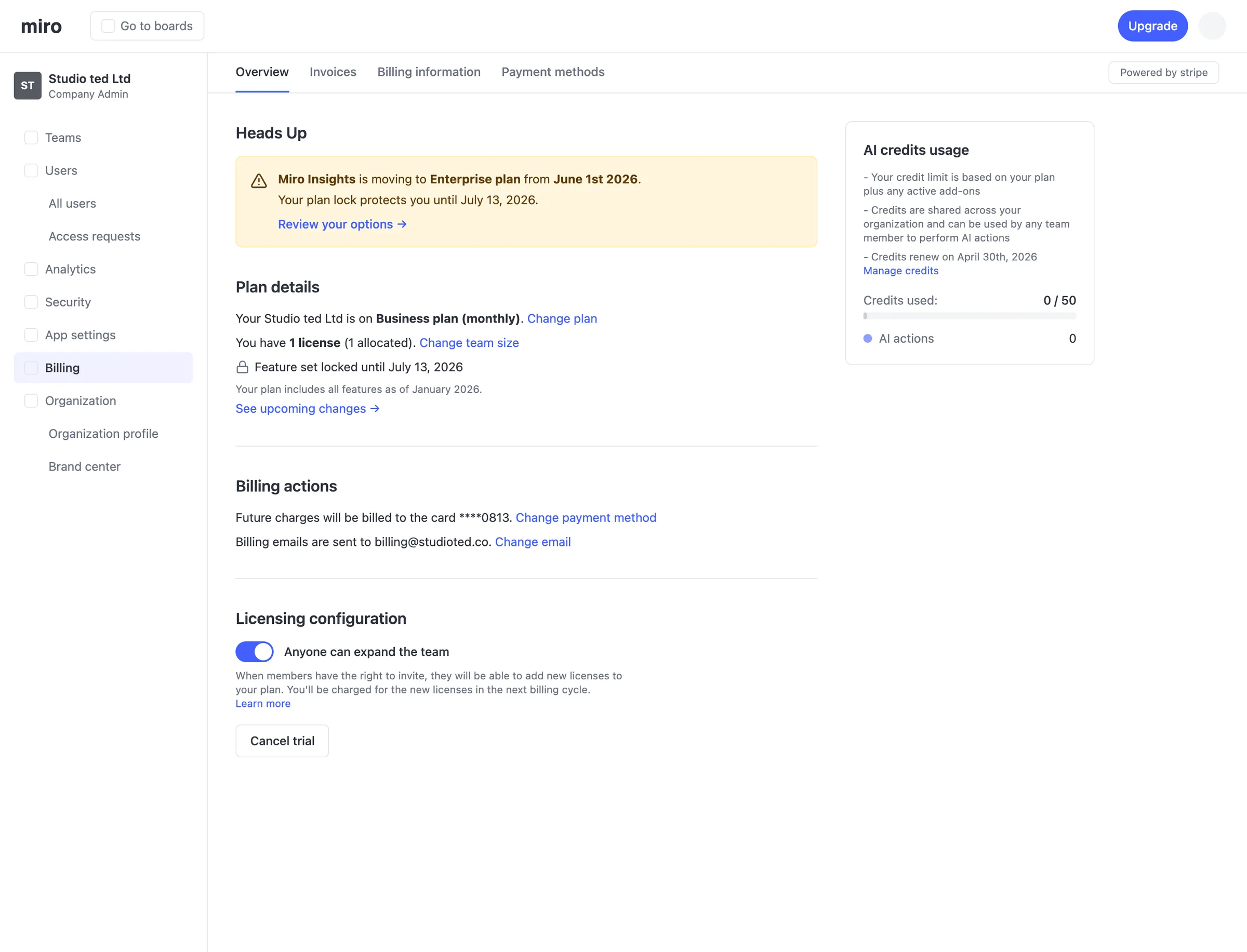
Default effectMost people take the pre-selected path, so it has to be the best one for most teams. A fair default is visible, explained and one tap from changing.Reactance, defusedPermission to wait lowers the pressure. People don’t need to leave to feel in control.Deadline effectA real date is enough urgency to prompt a decision, without the countdown timers that win the click and lose the trust.Variant only. Today there’s no choice to recommend or postpone. The price just changes.
- Default effectMost people take the pre-selected path, so it has to be the best one for most teams. A fair default is visible, explained and one tap from changing.
- Reactance, defusedPermission to wait lowers the pressure. People don’t need to leave to feel in control.
- Deadline effectA real date is enough urgency to prompt a decision, without the countdown timers that win the click and lose the trust.
03 The experiment
I’d run this flow as an experiment for a few weeks: the customers whose plan is changing get the conversation, and a matched group gets the experience they have today.
The goal: keep the customers whose plan is changing, and their trust, while giving the ones ready to expand a clear way up.
The win condition isn’t MRR. It’s churn and trust.
What I’d track
- Engagement · first weeks
- How many affected admins open the conversation, compare plans, and which path they pick.
- Retention
- Churn among affected customers against the matched group, and net revenue retention in that segment.
- Trust guardrails
- A trust score after the decision, support tickets and their tone, refund requests.
- Public sentiment
- Reddit, Trustpilot and G2 during and after the experiment. It worked if the bait-and-switch posts stop.
Work with me
Need this kind of thinking on your product?
I work with Series A and B startups as a fractional or full-time lead designer.